



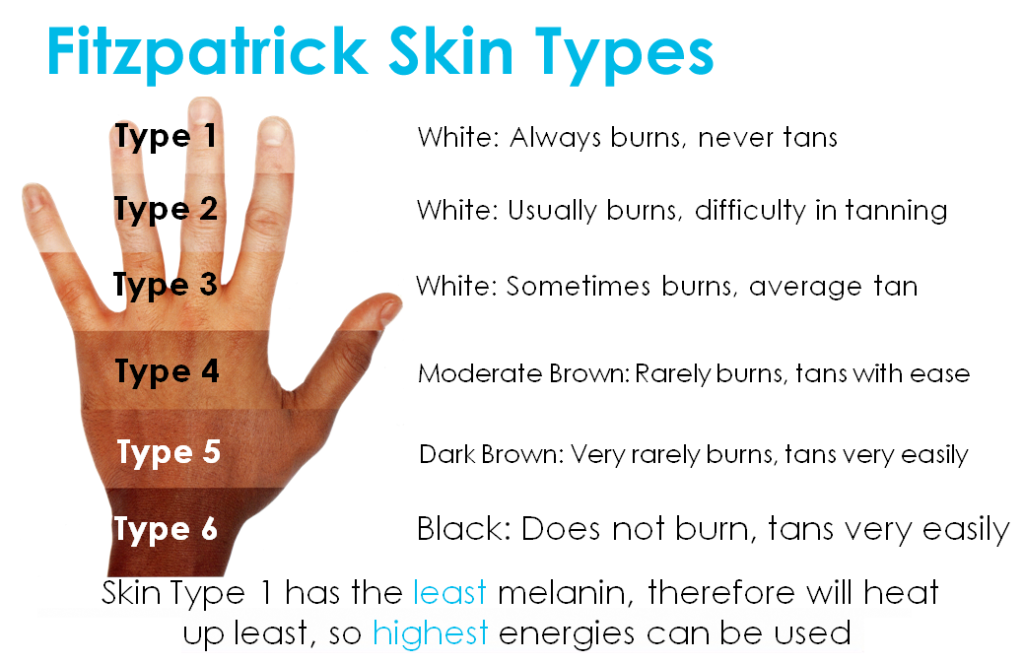
What your skin type means for you
Tanning beds and other artificial tanning machines are harmful for everyone, regardless of skin type. Some research suggests that people who use tanning machines before age 35 years are 75 times more likely to develop melanoma in their lifetime.
Your risk of sun damage is also higher if you live near the equator. The closer to the equator you are, the more intense the sun’s rays are, so being vigilant about sun protection is crucial.
Everyone should apply sunscreen daily to receive maximum protection. Here’s what else you should know about your skin and how to protect it based on your skin type.
Types 1 and 2
If your skin type is 1 or 2, you have a high risk of:
- sun damage
- skin aging from sun exposure
- melanoma and other skin cancers
- You should follow these tips to protect your skin:
Use a sunscreen with an SPF of 30 or greater.
Limit your sun exposure and seek shade whenever you’re out in the sun.
Wear a hat with a wide brim to protect your head and face.
Wear UV-blocking sunglasses.
Wear protective clothing with a UPF rating of 30 or higher if you plan to be in direct sunlight for extended periods.
Check your skin from head to toe each month.
Have an annual skin checkup with a doctor.
Types 3 to 6
If your skin is type 3 to 6, you still have some risk of skin cancer from sun exposure, especially if you’ve used an indoor tanning bed. You should still use sun protection even though your risk is lower than people’s with type 1 or 2 skin.
The Skin Cancer Foundation notes that African-Americans who have been diagnosed with melanoma usually are often diagnosed at a later stage, contributing to a poorer overall outlook.
For maximum protection, you should follow these tips:
- Limit your sun exposure.
- Wear a hat with a wide brim to protect your head and face.
- Wear UV-blocking sunglasses.
- Wear protective clothing if you plan to be in direct sunlight for extended periods.
- Wear sunscreen with an SPF of 15 or greater.
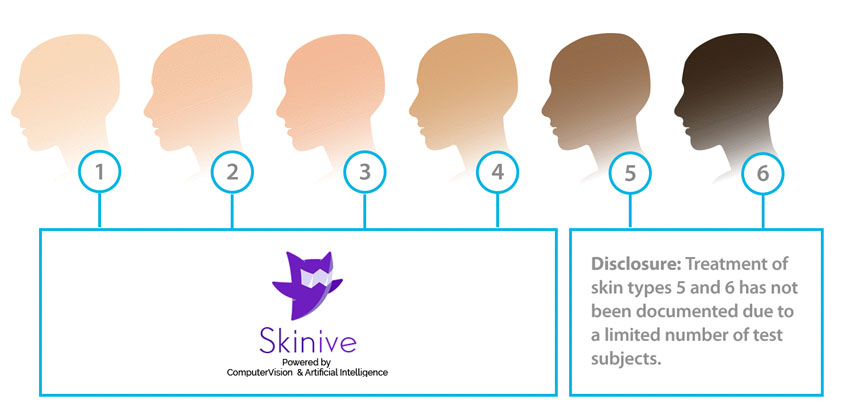
Check your skin from head to toe each month. Pay careful attention to any strange growths. Acral lentiginous melanoma is the dominant form of melanoma among darker-skinned people. It appears on parts of the body not often exposed to the sun. It’s often undetected until after the cancer has spread, so make sure you check all areas of your body.
Have an annual skin checkup with a doctor.
When to get screened
If you’re at an increased risk of skin cancer, you should have regular skin exams. Talk to your doctor about how often you should come in for a screening. Depending on your individual needs, skin screening could be more frequent than your annual checkup.
People at increased risk of skin cancer include those who have:
- personal or family history of skin cancer
- Fitzpatrick skin type 1 or 2
- a compromised immune system
You can also talk to your doctor about how and when you should do your own skin checks.
About the Fitzpatrick scale
If you’ve ever tried to match foundation or concealer to your skin, you know just how tricky skin typing can be. Enter Fitzpatrick skin typing, a scientific skin type classification. Though this form of skin typing won’t help you find your perfect shade, it can tell you just how much shade you should get on sunny days.
Developed in 1975, the system classifies skin type according to the amount of pigment your skin has and your skin’s reaction to sun exposure. This information can help predict your overall risk of sun damage and skin cancer.
Once you know your risk level, you can arm yourself with the tools you need to protect your skin. Read on to learn your Fitzpatrick skin type, what sun protection you should use, and more.
Recommended articles preview:
![[AI Generated] What Type of Acne Do You Have?](https://app.skinive.com/wp-content/uploads/2018/06/Dz2o-25X0AEZoWv-264x154.jpg)
1st June 2010
[AI Generated] What Type of Acne Do You Have?
OpenAI NN input: Acne is a broad term that encompasses a variety of skin ailments. It’s a condition that involves much more than an occasional pimple or zit. Acne comes in varying severity and it affects everyone differently. In order to successfully treat your acne, it’s essential to recognize and diagnose the different acne types […]
11th July 2021
Skinive has been CE Marked as a medical device
We are pleased to announce that Skinive has received CE Mark clearance in the European Union. The CE marking confirms that Skinive solutions meet the
2nd June 2010
[AI Generated] Acne types
OpenAI NN input: You may hear the term “breakout” used to describe all forms of acne, but this isn’t always an accurate description. Not all types of acne spread across the skin. Clogged pores cause acne itself. These may be attributed to: excess production of oil (sebum) bacteria hormones dead skin cells ingrown hairs [Generated […]